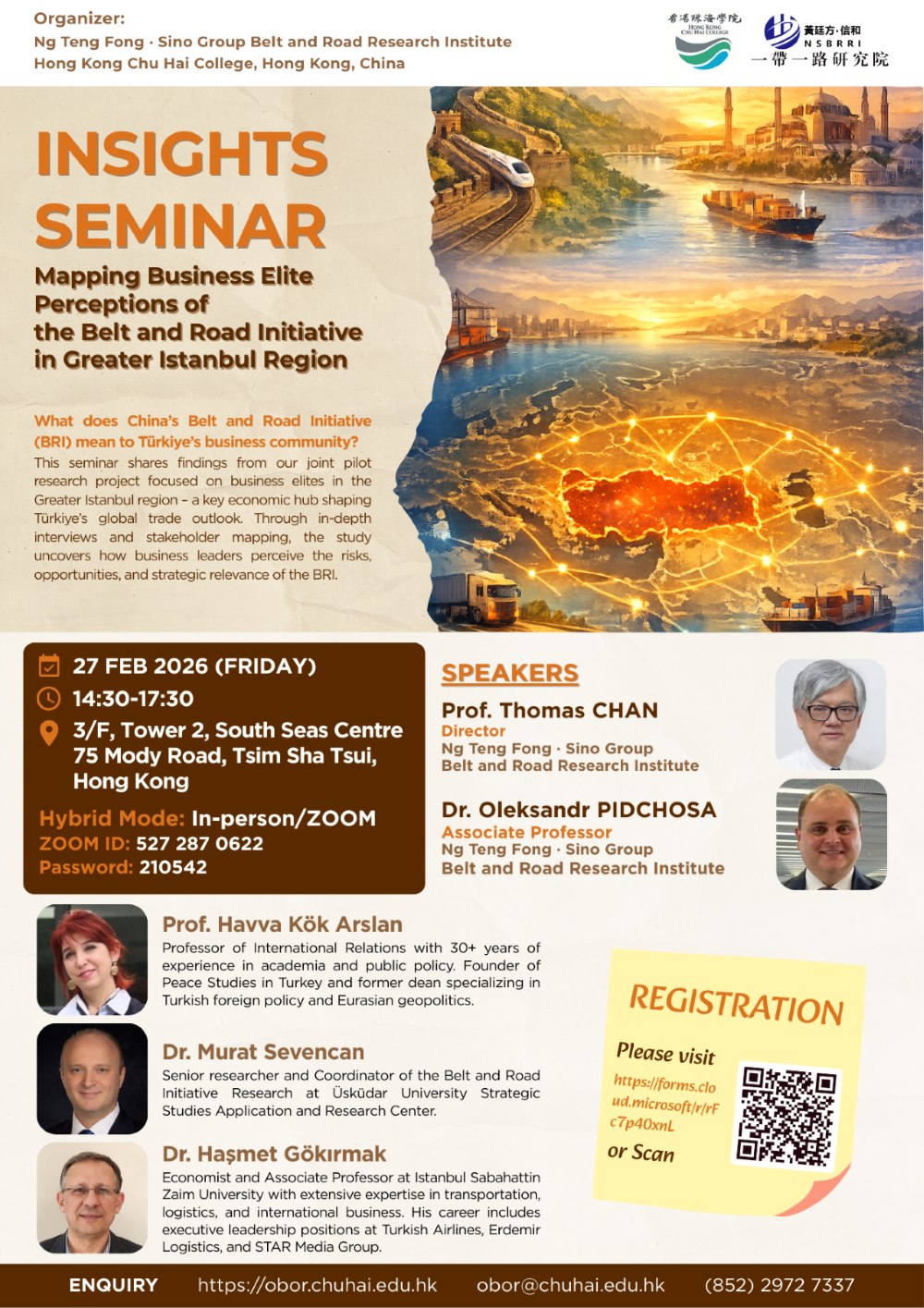
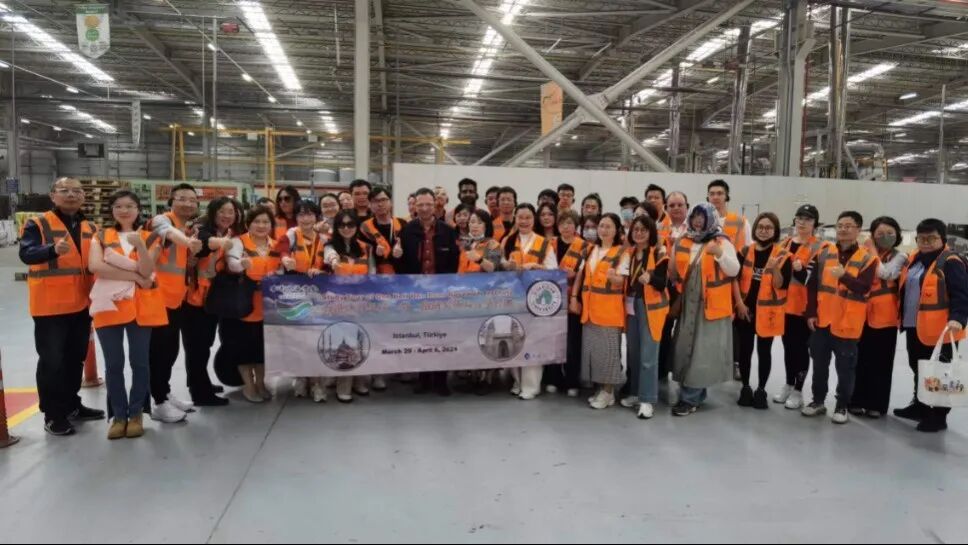
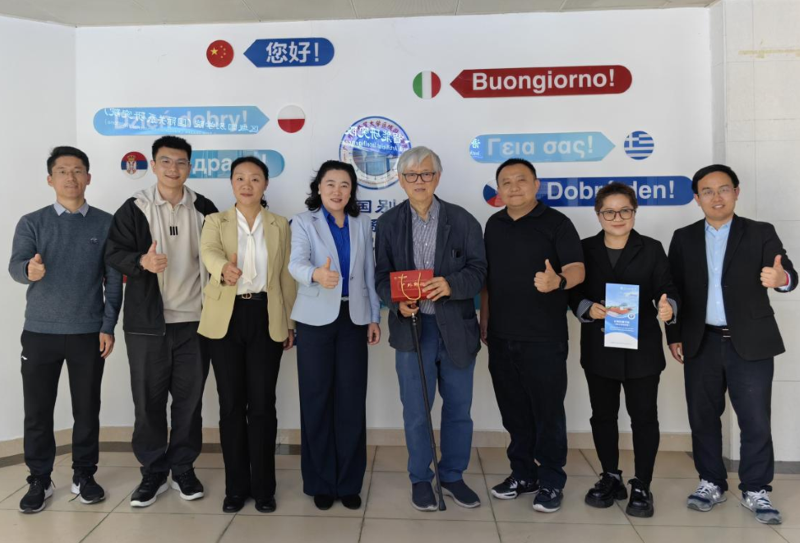
On 27 February 2026, the NSBRRI hosted a hybrid Insights Seminar that brought together researchers and practitioners from Hong Kong and Istanbul to present and discuss the findings of a joint pilot research project on the business elite’s perceptions of the Belt and Road Initiative (BRI) in the Greater Istanbul region. The event attracted around 50 attendees across both locations. The seminar lasted approximately 3 hours and included a welcome address, 3 research presentations, and a moderated panel discussion with Q&A.
The seminar was co-convened by two institutional leads. Prof. Thomas Chan, Director of the NSBRRI, delivered the welcome address and closing remarks and provided the overarching institutional and theoretical framing for the project. Dr. Oleksandr Pidchosa introduced the project and its institutional cooperation rationale and served as moderator for the panel discussion and Q&A.

Three research presentations were delivered by subject-matter experts. Prof. Havva Kök Arslan, Head of the Centre for Strategic Studies Research and Application at Üsküdar University, presented on Turkish perceptions of Türkiye’s expanding Eurasian connectivity. Dr. Murat Sevencan, Senior Researcher and BRI Research Coordinator at the same institution, presented the methodological design, survey validation, and six strategic themes shaping the BRI discourse as identified through grounded-based mapping. Dr. Haşmet Gökırmak, Associate Professor at Istanbul Sabahattin Zaim University, delivered the third presentation, examining the interface between business interests and geopolitics through the lens of geoeconomic statecraft and elite perceptions.
The seminar presented the consolidated results of the pilot study, which generated, the research team characterised, comprehensive empirical and theoretical insights. Among the core arguments advanced across the presentations was the premise that elites function as “semantic entrepreneurs”, translating global shifts into national strategies. Their perceptions of the BRI therefore carry disproportionate weight in shaping a country’s practical alignment with the initiative.
The research identified six strategic themes structuring the BRI discourse among Istanbul’s business elites, explored through a mixed-methods approach combining focus groups and in-depth interviews. The presentations highlighted that issues of trust, reciprocity, economic opportunity, and geopolitical positioning featured prominently in elite cognitive frameworks.
During the Q&A session, participants discussed not only the project results but also broader issues of connectivity, the military-political situation in the Middle East and its impact on the functioning of logistics corridors, the competitiveness of national economies under current conditions, and a range of related topics.
The seminar successfully demonstrated the value and rigour of the joint research architecture developed between the NSBRRI and its Turkish institutional partners. The hybrid format enabled effective collaboration across geographies and facilitated open, substantive exchanges among researchers and attendees. The pilot findings presented affirm the relevance and feasibility of perception mapping as an analytical tool in BRI research, and the announced expansion to Phase Two indicates strong institutional commitment to advancing this line of inquiry. The research team expressed confidence that the full-scale study will yield insights of significant value to academics and policymakers engaged with Eurasian connectivity and Türkiye-China relations.