
On 2 August 2026, a suicide bomber detonated himself near a police station in the Swat region of Khyber Pakhtunkhwa province, Pakistan. The attack claimed more than a dozen lives, the majority of them police personnel.
Swat had been a major hub of terrorism in 2008. Following a military operation in 2009, hundreds of militants fled across the border into Afghanistan, where they took refuge in Kunar province. After the collapse of the previous Afghan government and the return of the Afghan Taliban to power, some of these militants attempted to re-enter the Swat Valley in 2022. Strong public protests and local resistance, however, prevented the Pakistani Taliban from establishing a lasting presence. Nevertheless, residents reported renewed militant activity in 2025. Although the group carried out several small-scale attacks during that period, it was unable to execute any major operation.
Who are these Pakistani Taliban fighters?
The fighters currently active in the region trace their origins to Tehrik-e-Nifaz-e-Sharia Mohammadi (TNSM), a movement founded in the 1990s by Maulana Sufi Muhammad that sought the implementation of Islamic Sharia law in the Malakand region. Many of its members later joined Tehrik-e-Taliban Pakistan (TTP) under the leadership of Maulana Sufi Muhammad’s son-in-law, Mullah Fazlullah—widely known as “Mullah Radio” because of his regular radio broadcasts. The majority of these fighters adhere to the Panjpir school of thought, which differs from the predominantly Deobandi orientation of the Afghan Taliban and is generally regarded as more rigid and austere.
After the military operation in Malakand, Mullah Fazlullah relocated to Kunar province in Afghanistan together with hundreds of his followers. He subsequently rose to become the central leader of the TTP. Under his command, Pakistani Taliban militants carried out the December 2014 attack on the Army Public School in Peshawar, in which more than 100 children were killed. Although Mullah Fazlullah was later killed in Afghanistan, his followers remained active under successive commanders. The militants now operating in the north are predominantly drawn from this group and originate largely from the Malakand region.
How did they return from Afghanistan?
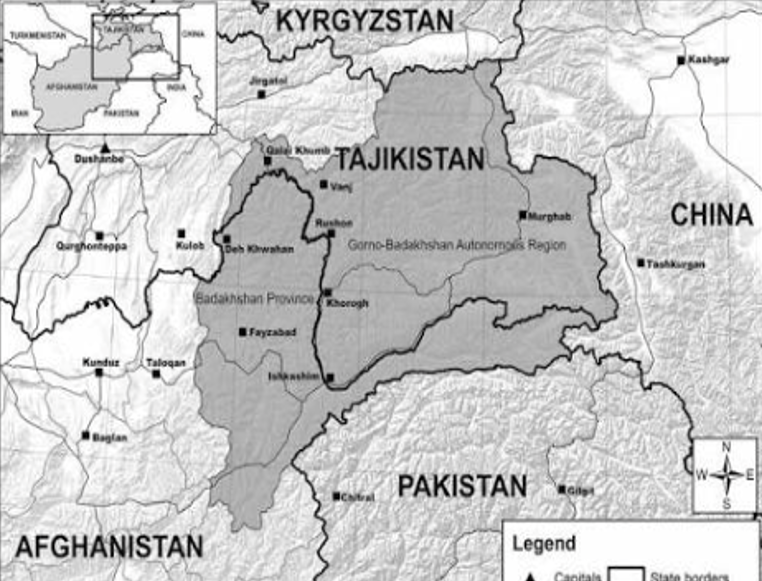
Although Swat itself does not share a border with Afghanistan, the broader Malakand Division does. The districts of Upper Chitral, Dir and Bajaur provide direct access routes from Afghan territory.
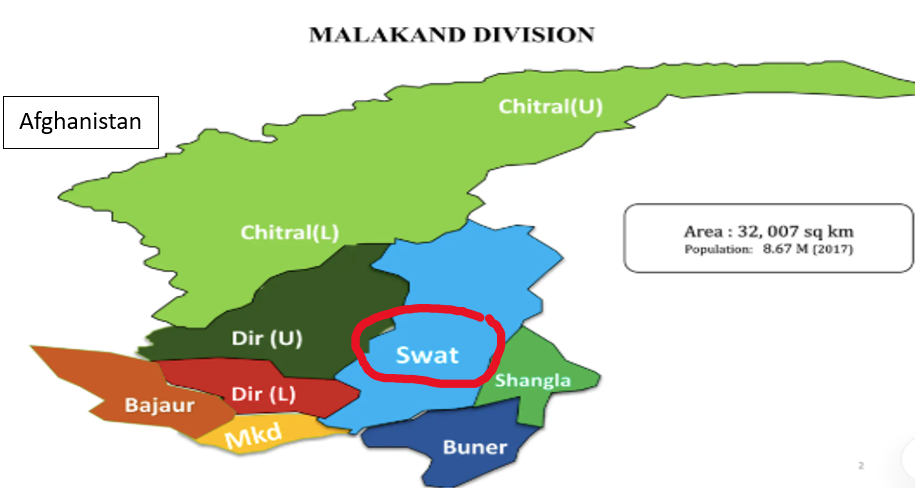
Earlier this year, NSBRRI observed movement of TTP elements through Dir and Chitral in the direction of Swat.
NSBRRI Assessments – July 2026
Our research team had already been monitoring these developments closely. Following the split within the TTP, we assessed that Jamaat-ul-Ahrar (JA) would seek to establish a foothold in the northern areas and that competition between the TTP and JA was likely. Consequently, we anticipated an acceleration of terrorist attacks across northern Pakistan.
In our assessment published on 10 July 2026, we stated:
“We assess that in future, as has already occurred in the southern districts of Khyber Pakhtunkhwa, the security situation in the north of the province—which links Pakistan to China via the Karakoram Highway (KKH)—will become a major challenge.”
Full report: https://obor.chuhai.edu.hk/terror-split-ja-left-ttp-in-pakistan/
Why does this matter for Chinese strategic interests?
Chinese nationals working on various projects in the region have repeatedly been targeted, including in suicide attacks and kidnappings. The perpetrators of the 14 July 2021 attack on Chinese personnel were from Swat. The Malakand region holds particular strategic importance for the China–Pakistan Economic Corridor (CPEC). It borders Gilgit-Baltistan, which in turn shares a frontier with China. Both its geographic position and its history of militant activity make Malakand critical to Chinese strategic interests.
Our Current Assessment
Terrorist groups are expected to continue their operations in the coming months. Other organisations, including Jamaat-ul-Ahrar and the Islamic State Khorasan Province (ISKP), may also attempt to exploit the situation and further destabilise the region. This phase of heightened activity is likely to persist until the onset of winter.