
What is in the report?
The Monitoring Team’s comprehensive six-monthly report (covering roughly mid-December 2025 to 9 June 2026) to the UN Security Council’s 1267/1989/2253 Committee on ISIL (Da’esh), Al-Qaida and associated entities. Overall threat levels remained broadly stable in the short term but intensified in the Sahel and South Asia. Al-Qaida’s senior leadership stayed marginalised, with unclear external-operations capability; ISIL (Da’esh) was at a lower ebb due to leadership losses (notably the May 2026 death of Abu Bakr ibn Muhammad ibn Ali al-Mainuki, deputy leader and head of the General Directorate of Provinces) and sustained counter-terrorism pressure, though its propaganda and incitement capacity remained potent. Both networks prioritised Africa and regional affiliates, kidnapping-for-ransom for revenue, and exploitation of regional conflicts (including the post-February 2026 Iran-related conflict). Key regional flashpoints included JNIM’s major offensive in Mali (coordinated with the Front de libération de l’Azawad), intense JNIM–ISGS rivalry, ADF expansion and lethality in the DRC, AQAP’s gains from the southern Yemen security vacuum, and continued pressures from Al-Shabaab and residual ISIL cells. Sanctions implementation saw limited list changes; financing relied heavily on local extortion, taxation, and increasingly cryptocurrencies/hawala; foreign terrorist fighter flows remained low but concerning (especially post-Hawl camp closure). The report stated the coordination and collaboration of Baloch Liberation Army (BLA), Tehrik-e-Taliban Pakistan (TTP), Alqaeda, and Islamic State in the Khorasan Province. An alarming issue that is mentioned in the report is the issuance of Afghan National Identity Cards to Alqaeda leadership in Afghanistan. Recommendations focused on beneficial ownership, digital-currency fields on the sanctions list, and restoring the report’s word limit.
South-East Asia: The threat from ISIL-linked entities and residual Al-Qaida influence remained fragmented and decentralised. Operational capacity of ISIL-South-East Asia and affiliates declined, but risks persisted via dispersed cells, self-radicalised actors, online recruitment, and inspired networks. Growing concern over minor radicalisation led Australia, Indonesia, and Malaysia to ban social media for children under 16. Notable incidents included Malaysian arrests of six youths (16–21) for ISIL allegiance, propaganda, and attack planning (motivated by Middle East conflicts and active on social/gaming platforms), and the investigation into the 14 December Bondi Beach attack in Australia (targeting a Jewish community event; perpetrators inspired by ISIL ideology).
What are the latest developments in the terror world as per the report?
The Asia section (Central/South Asia and South-East Asia) describes a persistent, multi-group threat landscape centred on Afghanistan as a permissive environment, with direct implications for China’s core interests in Xinjiang stability, border security (especially the Wakhan corridor), and countering Uyghur militant networks.
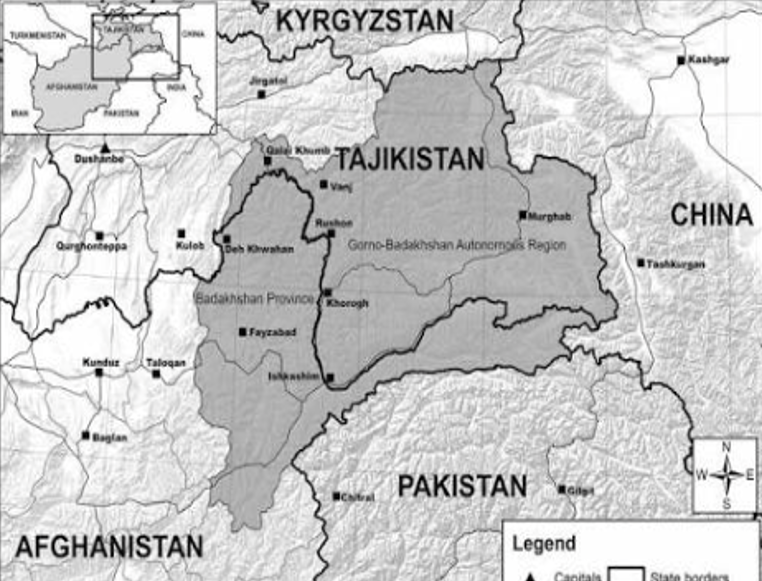
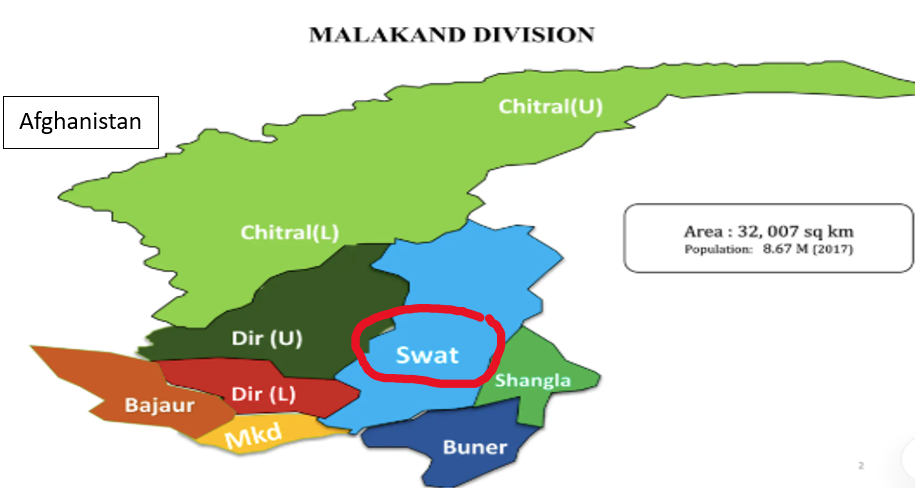
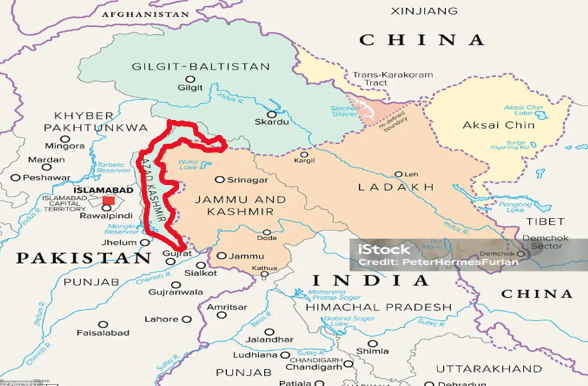
Central and South Asia Regional tensions remained high due to escalating cross-border attacks between Pakistan and Afghanistan, driven primarily by Tehrik-e-Taliban Pakistan (TTP) operations against Pakistani targets. The Taliban (de facto Afghan authorities) continued to provide support to TTP while publicly denying harbouring terrorist groups; they relocated 2,000 TTP fighters/families inland and issued private warnings to curb attacks, but the underlying relationship persisted. TTP restructured (new divisions covering Balochistan/central regions, Kashmir/Gilgit, and a “TTP Air Force”) and launched a spring “Operation Khyber” campaign, conducting high-casualty attacks (e.g., a 16 February vehicle-borne IED in Bajaur killing 11 security personnel).
ISIL-Khorasan (ISIL-K) remained the greatest threat to the Taliban and the wider region. Despite serious setbacks from Pakistani and Taliban operations (especially in the north and Kabul), it retained resilience, modern equipment (drones, night-vision, thermal imagers), urban-combat training, and the capacity for infrequent high-profile mass-casualty attacks. Attacks declined inside Afghanistan but rose in Pakistan (including a claimed 6 February suicide bombing at a Shia mosque in Islamabad killing 32, and other incidents). ISIL-K dispersed training across the Pakistan-Afghanistan border and maintained a presence in Kabul suburbs; it was assessed to share some facilitation networks with the Baloch Liberation Army.
Al-Qaida’s status and strength in Afghanistan were unchanged. Its media outlet issued a notable 28 April statement explicitly supporting both the Taliban and (for the first time publicly) TTP against Pakistan. Al-Qaida continued providing ideological guidance, training, and support to TTP; one Member State reported Al-Qaida trainers working with both TTP and Baloch Liberation Army elements. Al-Qaida in the Indian Subcontinent (AQIS) evolved into a more coherent regional entity operating in decentralised cells, formed the backbone of Ittihad-ul-Mujahideen Pakistan, and was officially linked to the November 2025 Red Fort attack in Delhi; concerns existed about expansion into Bangladesh.
What are the issues of concern for Chinese strategic interests mentioned in the report?
Movement/Turkistan Islamic Party (ETIM/TIP) was reported to be growing and reconcentrating in Badakhshan (including the Wakhan corridor) with new strongholds in Kunduz. This is exactly what the NSBRRI Monitoring and Evaluation Report mentioned in July 2026. Here is the link to that report:
https://obor.chuhai.edu.hk/me-the-emerging-situation-in-northern-afghanistan/
Its overall leader, Abdul Haq (QDi.268), ordered increased combat readiness via weapons and equipment purchases. The group trained militants at a newly established Al-Qaida camp in Barg-e Matal, Nuristan, and emphasised drone investment/development. It continued urging members in the Syrian Arab Republic to relocate to Afghanistan (some already had). One Member State assessed the group as still small, militarily inactive, lacking advanced drone manufacturing capability, and constrained by the Taliban—yet the geographic positioning near China’s border and the explicit long-term goal of establishing a “caliphate” in Central Asian countries and Xinjiang constitute a clear strategic concern for Beijing. (Complementary reporting from the Syria/Levant section notes ETIM/TIP as the largest foreign terrorist fighter contingent in Syria—approximately 3,500 fighters integrated into Syrian forces—whose Syrian-branch leader publicly boasted of “returning to Xinjiang, China, through jihad” and reportedly met a former World Uyghur Congress president on fundraising/recruitment.)
In short, while ISIL-K and TTP dominate the immediate kinetic threat picture in South Asia, the reported consolidation and outward orientation of ETIM/TIP in northern Afghanistan (and residual presence/networks in Syria) represent the most direct long-term challenge to China’s strategic interests in preventing militant spillover into Xinjiang and maintaining border security.
Our Assessments
The most strategically alarming development confirmed in the latest UN Analytical Support and Sanctions Monitoring Team report is the reported issuance of Afghan national identity cards (tazkiras) to Al-Qaida in the Indian Subcontinent (AQIS) leadership elements based in Kabul. This is not merely an administrative anomaly; it constitutes a profound erosion of the post-2021 counter-terrorism architecture in Afghanistan and carries direct, high-stakes implications for Chinese national security. Once equipped with official Afghan identity documents, AQIS cadres—and by logical extension other Al-Qaida-linked networks operating under the same permissive environment—gain enhanced freedom of movement, access to financial and logistical systems, and the ability to obscure their true nationalities. This is particularly consequential for East Turkistan Islamic Movement / Turkistan Islamic Party (ETIM/TIP) fighters, who maintain a documented presence in Afghanistan (including reconcentration in Badakhshan and the Wakhan corridor) and retain an explicit long-term objective of projecting violence into Xinjiang. The possession of tazkiras would significantly complicate the efforts of Member States, including China, to identify, track, and interdict their own nationals or potential attackers before they can exploit cross-border routes.
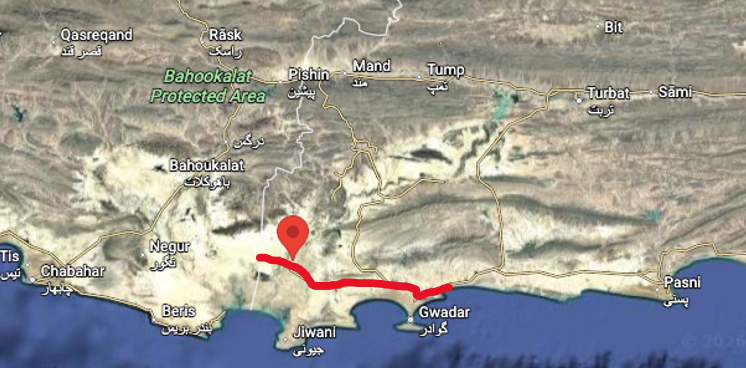
Compounding this identity-related vulnerability is the reported sharing of facilitation networks and logistics between the Baloch Liberation Army (BLA), Tehrik-e-Taliban (TTP) and Islamic State Khorasan Province (ISKP). ISKP cadres bring battle-tested global experience in complex attacks, urban operations, and the employment of advanced tactical equipment (drones, night-vision devices, thermal imagers). The transfer or joint utilisation of such capabilities risks elevating BLA’s operational lethality and sophistication far beyond its traditional profile. Simultaneously, Tehrik-e Taliban Pakistan (TTP) continues to benefit from Al-Qaida training and ideological guidance, further amplifying the diffusion of expertise across these interconnected networks. Independent monitoring by NSBRRI evaluation teams has consistently corroborated these patterns of collaboration and capacity enhancement.
Taken together, these trends point to a near-term trajectory in which the concerned terrorist outfits become more lethal, more mobile, and more technically proficient. For China, the strategic stakes are acute: the combination of tazkira-enabled mobility for ETIM/TIP-linked actors, the geographic proximity of their Afghan strongholds to the Chinese border, and the potential for knowledge transfer from ISKP and Al-Qaida trainers creates a multi-vector threat to Xinjiang stability, CPEC, Belt and Road infrastructure security, and broader regional interests. Neighbouring states—Pakistan, Iran, the Central Asian republics, and China itself—face the prospect of intensified cross-border terrorism, complicating both bilateral counter-terrorism cooperation and the wider security architecture of the region. These developments therefore merit sustained, high-priority analytical attention from the community of experts and institutions focused on Chinese strategic interests.