
What is the current situation of the Saudi-Houthi conflict?
As of the second half of September 2026, the Saudi-Houthi conflict has intensified significantly, with cross-border missile/drone strikes and ground fighting in Yemen.
What do we know so far from different reports?
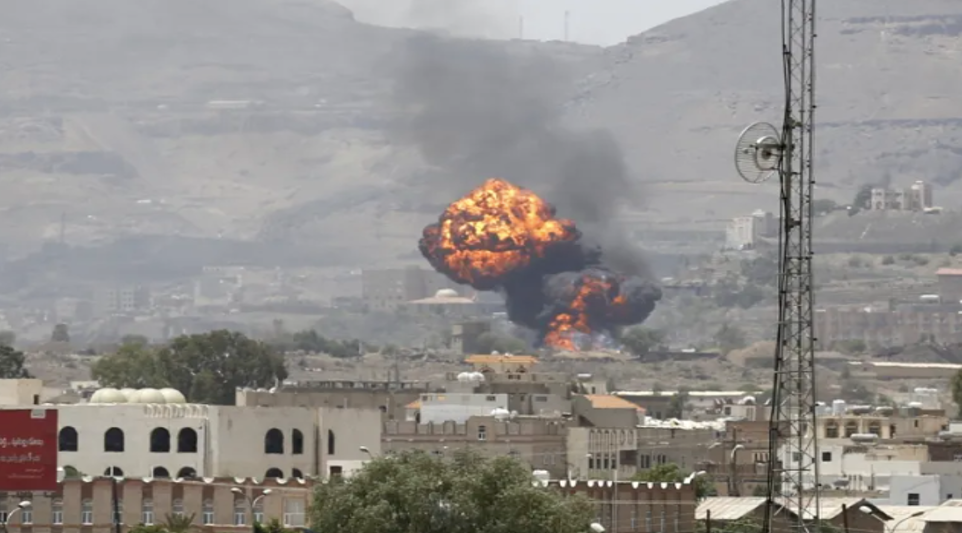
Courtesy: Al Jazeera Network
Yemen’s Houthis claimed they launched ballistic missiles, cruise missiles, and drones targeting “sensitive sites” in the Saudi capital Riyadh and Aramco oil facilities in the Red Sea port of Yanbu. The Saudi-led coalition confirmed that its air defences intercepted and destroyed a ballistic missile fired toward Riyadh at dawn on Saturday, 19 September. This was the first air-raid alert sounded in Riyadh since the current escalation began in July. Smoke and a fire were reported near King Khalid International Airport in Riyadh involving an Aramco fuel tank; flights experienced temporary disruptions. Saudi authorities reported no major casualties or confirmed significant damage from the Riyadh attempt. Saudi forces also said they thwarted additional Houthi attempts to target civilians and infrastructure in Bisha, Taif, Farasan, and Yanbu.UN Secretary-General António Guterres strongly condemned the Houthi attacks on Saudi infrastructure and civilian areas.
The NSBRRI Monitoring and Evaluation Team has already posted part 1 of this report, available here:
https://obor.chuhai.edu.hk/saudi-houthi-conflict-and-the-mecca-pact-part-1/
Ground fighting and territorial moves in Yemen
Intense clashes continued on Sunday (20 September) in southwestern Yemen (areas including al-Wazi’iyah, al-Madaribah, and al-Arah) between Houthis and Saudi-backed government forces. Houthis are pushing to expand control, which could threaten to cut off the city of Taiz. Fighting has also occurred near positions overlooking the Bab al-Mandab Strait, a key international shipping chokepoint. Houthis have previously advanced along the Red Sea coast, capturing sites such as Mocha port and Perim Island.
Both sides report ongoing airstrikes and ground operations. Houthis have accused Saudi Arabia of hundreds of airstrikes in recent weeks; Saudi-backed forces have reported casualties on both sides in recent clashes.
What is the current status of the Mecca Defence Pact among Saudi Arabia, Turkey, and Pakistan?
The Mecca Pact is undergoing its first significant practical test. Both Turkey and Pakistan have affirmed commitments and signalled readiness for (primarily technical or defensive) support if requested by Riyadh, but neither has announced direct combat operations inside Yemen. Diplomatic efforts, particularly by Pakistan toward Iran, continue alongside the military signalling.
How has Turkey positioned itself on the Mecca Pact in the current crises?
Turkish Foreign Minister Hakan Fidan stated on or around 19–20 September that Saudi Arabia is facing “very serious attacks on its territorial integrity and sovereignty” and that Turkey is ready to help meet Saudi military needs—particularly technical ones—under the pact. He emphasised solidarity and that Turkey would have “no issues” providing such support, while noting the alliance’s responsibilities. No announcement of combat troops entering Yemen has been made.
How has Pakistan positioned itself on the Mecca Pact in the current crisis?
Pakistan has strongly condemned the Houthi attacks and expressed “complete solidarity” with Saudi Arabia. Defence officials (including statements attributed to Defence Minister Khawaja Asif and military spokespersons) have said the pact would become operational in the event of unprovoked aggression or spillover into Saudi territory, and that Pakistan would defend Saudi Arabia “to any extent,” including physically if required. Pakistani troops, aircraft, and systems are already present in Saudi Arabia under prior bilateral arrangements.
However, the Foreign Office has clarified that there have been no discussions so far on a military response under the Mecca agreement and that Pakistan would act “when the time comes.” Islamabad has also engaged diplomatically with Iran (including high-level contacts) to urge restraint on the Houthis and pursue de-escalation, reflecting Pakistan’s dual role as a Saudi defence partner and a channel to Tehran. Reports indicate coordination among the three pact members has focused on responses launched from Saudi territory rather than entry into Yemen.
How Houthi warned Pakistan and Turkey?
A senior Houthi official, Mohammed al-Bukhaiti, publicly warned both Turkey and Pakistan against military involvement alongside Saudi Arabia. He stated that if either joined the conflict, the Houthis would respond with an “iron fist” and “discipline” them in the same manner as Saudi Arabia. The warning was directed at the governments.
Can Regional Diplomacy Still Pull the Middle East Back from the Brink?
A Practical Roadmap for De-escalating the Saudi–Houthi–Iran Escalation
In the current Middle East crisis of September 2026—marked by the prolonged U.S.-Israeli confrontation with Iran that began in February, the Houthis’ rapid seizure of Yemen’s entire Red Sea coastline (including Mocha and approaches to the Bab al-Mandab Strait), repeated Houthi missile and drone attacks on Saudi targets (including near Riyadh, Yanbu, and claims involving the direction of Mecca), and Saudi airstrikes in response—the risk of a wider multi-front war remains acute. Global oil flows through Hormuz and the Red Sea are already constrained, and any further spiral could draw in more Gulf states, activate existing defence pacts, and deepen humanitarian catastrophe in Yemen.
Against this backdrop, the diplomatic track already being pursued by Pakistan and Turkey offers a realistic, staged pathway toward de-escalation. The following steps build directly on that existing mediation effort and the practical realities on the ground.
Step 1: Immediate Ceasefire
Saudi Arabia and the Houthis announce a mutual, verifiable ceasefire. This would freeze Houthi advances in western Yemen and end cross-border strikes, while Saudi forces halt airstrikes. Oman’s long-standing quiet channels to both sides, combined with Pakistan’s and Turkey’s recent contacts, make this the most achievable first move.
Steps 2–3: Backdoor Diplomacy and Confidence-Building
Pakistan, Oman, and Turkey intensify discreet mediation with Tehran, leveraging Pakistan’s dual relationships (defence ties with Riyadh and pragmatic engagement with Iran) and Turkey’s regional activism. Joint working teams—comprising security, intelligence, and economic officials—would implement confidence-building measures: temporary restrictions on missile/drone launches, limited humanitarian corridors in Yemen, and deconfliction mechanisms for Red Sea shipping. Early signals from Pakistan’s military leadership already point in this direction.
Step 4: Collective Wisdom on Costs
Sustained, high-level discussions among Gulf, Iranian, Pakistani, Turkish, and Omani officials would focus relentlessly on shared interests: the economic cost of prolonged Hormuz/Red Sea disruption, the danger of activating mutual-defence commitments, and the long-term damage to regional development. Framing the conflict in terms of mutual vulnerability rather than zero-sum ideology can create political space for restraint.
Steps 5–6: Regional Conflict-Resolution Body
Regional stakeholders (Saudi Arabia, Iran, Yemeni parties, Pakistan, Turkey, Oman, and other interested Gulf states) establish a standing conflict-resolution mechanism with clear authority to monitor ceasefires, adjudicate complaints, and recommend or enforce de-escalatory steps. This body would operate with transparent rules and third-party facilitation, reducing the chance that local incidents automatically trigger broader retaliation.
Step 7: Broader Peace Framework through a Revived OIC
Once immediate temperatures are lowered, the Organisation of Islamic Cooperation is reactivated as a platform for a longer-term Middle East stability and development agenda. This could include coordinated reconstruction in Yemen, energy-security guarantees, and economic connectivity projects that give all parties a stake in durable calm.
These steps are not utopian. They rest on existing relationships (Pakistan–Saudi–Turkey defence coordination, Oman’s mediation tradition, and intermittent Iran–Pakistan contacts) and address the most urgent flashpoints of September 2026. Success would require simultaneous restraint by external actors and genuine recognition in Riyadh and Tehran that further escalation serves neither country’s core interests. In a region already strained by multiple overlapping wars, a disciplined, sequenced diplomatic effort remains the most credible alternative to uncontrolled expansion of the conflict.
How escalation chain look like?
Here is a possible scenario if the situation escalated. Based on actions and reactions, let’s see how one step can lead to another and a regional conflict can lead to a much broader conflict.
Trigger (Step 1)
After a major Iranian missile and drone barrage on Israeli and U.S. targets in the region, Israel and the United States conduct large-scale joint airstrikes on Iranian nuclear, missile, and command facilities. Iran declares this an act of war and vows a sustained campaign.
Expansion via proxies (Steps 2–3)
Iran sharply increases targeting data and advisory support to the Houthis. Within days, the Houthis launch coordinated drone and missile attacks on Saudi oil infrastructure at Ras Tanura and on several Saudi air bases, framing the strikes as “solidarity” with Iran.
Collective defence (Step 4)
Saudi Arabia formally invokes joint-defence arrangements under a Makkah Pact framework. Gulf partners issue statements of support; contingency plans for air and missile defence coordination are activated.
New participants (Step 5)
Pakistan announces the dispatch of air-defence units and special forces to Saudi Arabia under the collective-defence umbrella. Turkey, citing both alliance obligations and its own regional interests, begins reinforcing its military presence in northern Syria and offers logistical and intelligence support to the Saudi-led effort.
New flashpoint (Step 6)
Israeli aircraft conducting strikes against Iranian-linked targets in Syria encounter Turkish air-defence radars and aircraft operating in the same airspace. A series of near-misses and electronic confrontations escalates into limited exchanges of fire between Israeli and Turkish forces.
Regionalisation (Steps 7–8)
Fighting now spans multiple fronts simultaneously:
• Direct U.S./Israeli–Iranian exchanges in the Persian Gulf and over Iran.
• Houthi–Saudi and allied operations in Yemen and the Red Sea.
• Israeli–Turkish tension and proxy fighting in Syria.
• Pakistani and Turkish units operating in the Gulf theatre.
That is how what began as a bilateral confrontation can become a multi-theatre interstate war involving the United States, Israel, Iran, Saudi Arabia, the Houthis, Pakistan, and Turkey, with other regional actors under pressure to choose sides.
This is a speculative escalation pathway, not a prediction. Each link depends on political decisions, restraint mechanisms, and outside mediation that could interrupt the chain at any point.