
What do we know about the latest on the Saudi-Houthi Conflict in the Middle East?
The Saudi-Houthi conflict has sharply escalated in recent weeks, ending years of relative calm under the 2022 UN-brokered truce and tying into the broader US-Iran war.
Here are some key recent developments in the escalation. Iran-aligned Houthi forces have advanced along Yemen’s western Red Sea coast, seizing the port city of Mokha (Mocha), Perim Island (in the Bab el-Mandeb Strait), and other positions. This strengthens their ability to threaten shipping through the strait, a critical route that has become more important for Saudi (and global) oil exports after Iran’s effective restrictions on the Strait of Hormuz.
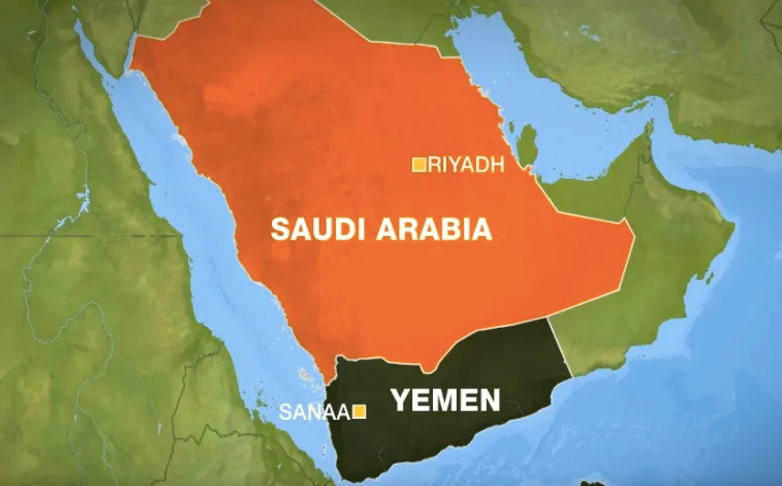
Houthis have launched missile and drone strikes on southern Saudi cities and military sites (including Khamis Mushait, Abha, and Taif). Recent attacks injured 13 civilians (with total injuries since the July escalation around 100), damaged homes and vehicles, and prompted Saudi security alerts across multiple areas, including Mecca, Jeddah, and Taif. Saudi air defences intercepted a Houthi drone south of Mecca before it entered restricted airspace; the Houthis denied targeting the holy city, calling the claim a “worn-out lie,” and said their operations focus on military and oil targets. On the other hand, Houthis claimed they shot down a Saudi F-15 fighter jet over Marib province using a locally manufactured surface-to-air (or air-to-air) missile while it supported operations. They also said they engaged other Saudi F-15 and Typhoon jets searching for wreckage. Saudi Arabia has not confirmed the loss. Houthis accused Saudi forces of conducting hundreds of airstrikes (claims of 450+ in a week or 54 in a short period) on Houthi-held areas.
The Saudi-led coalition has conducted airstrikes on Houthi targets in Yemen and vowed to respond “firmly” to protect sovereignty. Saudi Civil Defence issued alerts, and the government has emphasized self-defense rights.
What so far is Pakistan and Turkey’s response to the developments after the Mecca Pact with Saudi Arabia?
For details on the Mecca Pact, please read the NSBRRI M&E report linked below:
https://obor.chuhai.edu.hk/mecca-joint-defence-agreement-a-strategic-pivot-in-middle-east-security/
Pakistan’s Foreign Office and Permanent Representative to the UN have repeatedly and strongly condemned Houthi (Ansar Allah) attacks and threats, particularly those targeting Saudi Arabia and commercial shipping in the Red Sea/Bab al-Mandab.
On 15–16 September 2026, at a UN Security Council emergency meeting on Yemen, Ambassador Asim Iftikhar Ahmad stated that Houthi military escalation inside Yemen, continued attacks on Saudi Arabia, and developments along Yemen’s Red Sea coast have brought the conflict to an “extremely dangerous juncture.” He condemned “in the strongest terms” all Houthi attacks against Saudi Arabia, reaffirmed “unwavering support” for Saudi sovereignty, territorial integrity, security and prosperity, and fully backed Saudi Arabia’s right (under the UN Charter and international law) to take necessary measures to defend its territory, citizens and assets. He also warned that expansion of attacks around Bab al-Mandab and violations against commercial shipping threaten freedom of navigation, global trade, supply chains and energy security. Pakistan supports an inclusive, Yemeni-led political process under UN auspices and continues high-level efforts for de-escalation.
In July 2026 (and reiterated later), Pakistan’s Foreign Office Spokesperson condemned Houthi threats of a maritime embargo against Saudi Arabia and commercial shipping, calling them threats to regional security, freedom of navigation and the rules-based maritime order. Any hostile act against Pakistani-flagged vessels or maritime interests would be treated as a grave threat to Pakistan’s national security; Pakistan reserved the right to take all necessary measures, including lawful use of force in self-defence. It also expressed concern over attempts to draw Saudi Arabia into wider Middle East conflict.
Pakistan maintains solidarity with Saudi Arabia while emphasising diplomacy and a political settlement in Yemen.
As far as Turkey (Türkiye )’s stance is concerned, the Turkish Ministry of Foreign Affairs has issued clear official statements condemning Houthi actions against Saudi Arabia and threats to maritime security, while expressing solidarity with Riyadh and calling for de-escalation.
On 8 September 2026, Turkey stated, “We condemn in the strongest terms the recent attacks carried out by the Houthis against Saudi Arabia, which disregard the safety of civilians and escalate tensions in the region. We reaffirm our support for Saudi Arabia’s sovereignty and territorial integrity. These attacks also undermine diplomatic efforts aimed at bringing the conflict in Yemen to an end through a lasting political solution. We call on the Houthis to cease their aggressive actions immediately.”
On 22 July 2026, in another statement, condemned Houthi threats to impose a naval blockade against Saudi Arabia and reaffirmed solidarity. Actions/threats endangering maritime security and freedom of navigation in the Red Sea and Bab al-Mandab, targeting transport and global trade, must stop immediately. Called for refraining from conduct that could further escalate regional tensions. Turkey strongly condemned a Houthi missile attack on southern Saudi Arabia, reaffirming full solidarity and warning against escalation. Turkey has also condemned specific attacks on shipping involving Turkish-linked vessels in the past and supports Yemen’s unity, sovereignty and a political solution, while noting Saudi and UAE efforts toward stability.
All three countries’ foreign offices, including Saudi Arabia, strongly oppose Houthi attacks on Saudi territory and commercial shipping, emphasise freedom of navigation, support Saudi self-defence rights, call for de-escalation, and favour a UN-facilitated, Yemeni-led political solution. Pakistan and Turkey stress solidarity with Saudi Arabia and diplomacy; Saudi Arabia focuses on self-defence, rejection of Houthi narratives, and enforcement of UNSC resolutions. Positions have been consistent amid renewed Houthi escalations linked to broader regional tensions. But so far, Pakistan and Turkey have heavily depended on diplomatic efforts rather than any military support to Saudi Arabia in the conflict with Houthis. Diplomatic sources from both Pakistan and Turkey revealed to NSBRRI that the Mecca Pact still needs time for its structure and to have a functioning body. Lots of things are still in the development stage under the pact. That is the reason that both Pakistan and Turkey are working more on the diplomatic front.
What are the broader impacts of the conflict?
The East-West Pipeline (a key alternative export route carrying crude to the Red Sea port of Yanbu) was damaged by drone strikes launched from Iraq (Saudi Arabia attributes this to Iran-aligned militias; it is separate from but concurrent with Houthi actions). The pipeline was shut down as a precaution; repairs could take weeks, adding pressure amid already disrupted Hormuz traffic. Oil prices have risen sharply (Brent above $100/barrel in recent trading).
In Yemen, fighting has displaced roughly 125,000 people recently, according to UN figures, worsening the humanitarian situation.
Saudi Crown Prince Mohammed bin Salman has sought regional support (including a meeting with Egypt’s President Abdel Fattah el-Sisi) and contacted US President Donald Trump for military aid against the Houthis (reports indicate limited or no direct US combat intervention so far, with some intelligence support and CENTCOM engagement). Analysts note Saudi Arabia faces a dilemma: it wants to deter further Houthi advances and attacks without a costly full-scale re-engagement in Yemen, while protecting Vision 2030 economic goals and oil exports. The Houthis appear emboldened by the regional dynamics and are using pressure on shipping and Saudi territory for leverage.