
Khyber Pakhtunkhwa now stands under emergency rule. Pakistan’s federal government has imposed governor’s rule across the province, stripping the elected provincial administration of power and placing the region under direct central authority. This is not a routine administrative adjustment. It is a calculated, high-stakes assertion of state power in one of the most strategically sensitive territories in South Asia.
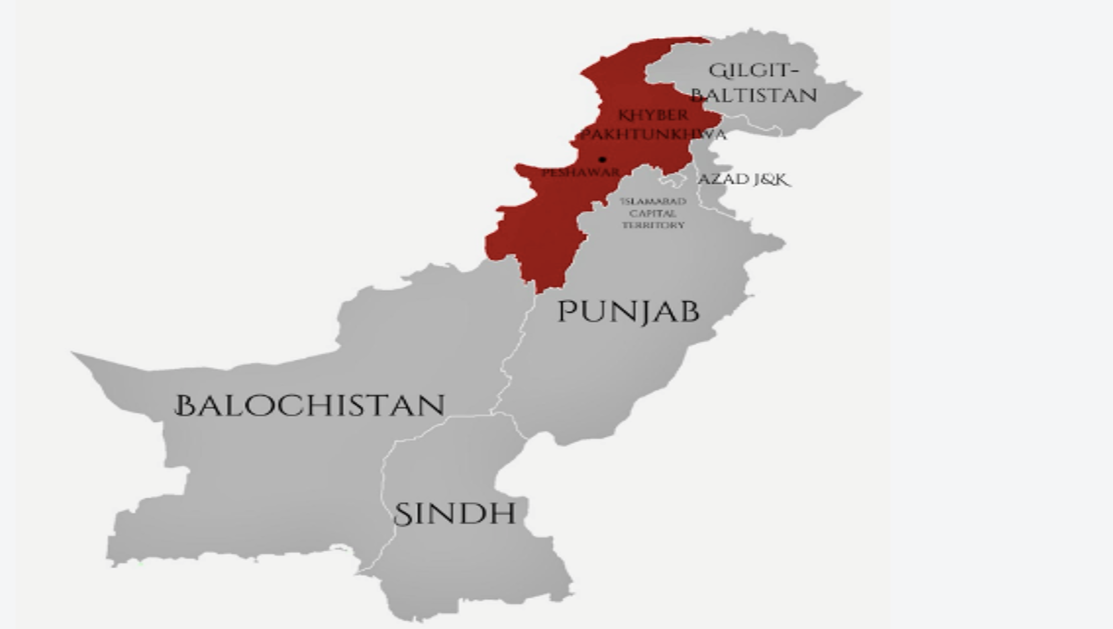
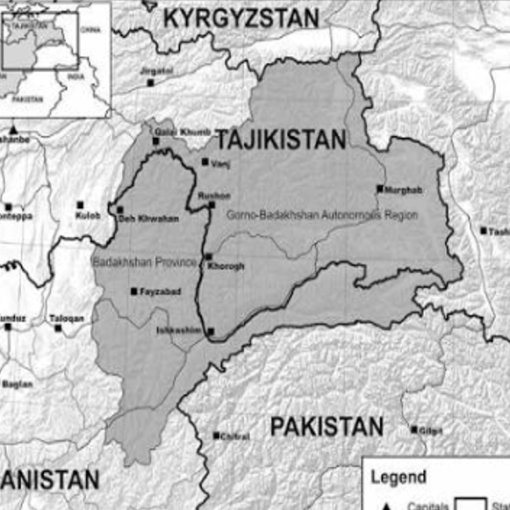
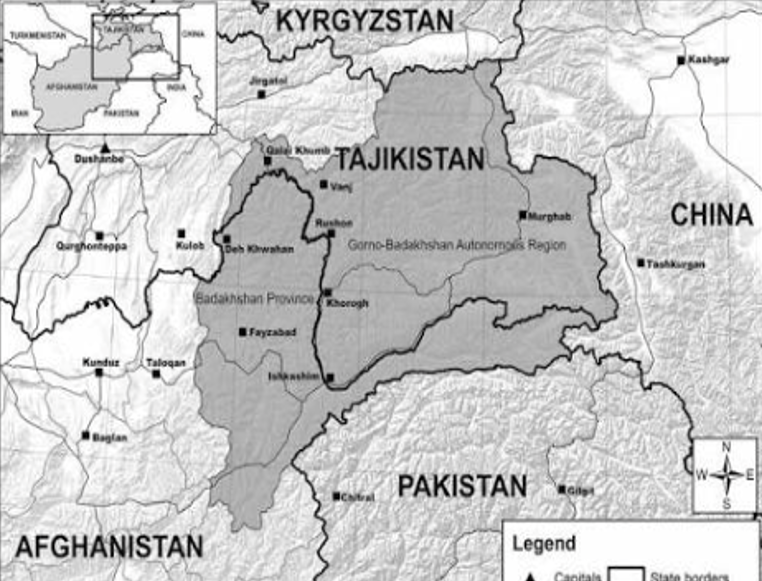
Khyber Pakhtunkhwa’s geography alone explains the urgency. The province shares a long, mountainous border with Afghanistan and sits astride the approaches to the Wakhan Corridor—the narrow strip of Afghan territory that touches China’s Xinjiang region. Through this same landscape runs the western alignment of the China-Pakistan Economic Corridor, a multi-billion-dollar artery of roads, energy projects, and trade routes that Beijing and Islamabad regard as vital to their long-term partnership. Instability here does not remain local; it radiates outward toward Afghan territory, Chinese interests, and the broader regional balance.
Why was an emergency imposed in that region?
The federal government justified the emergency on the grounds of a catastrophic breakdown in law and order. Officials argued that the situation had deteriorated to the point where only the immediate exercise of constitutional emergency powers could restore the state’s monopoly on force. In their view, delay was no longer an option.
The decision to remove the provincial government rested on a sharper accusation: that the elected administration had failed—or refused—to give full political backing to ongoing military operations against terrorist networks. Senior federal ministers went further, charging that the ruling Pakistan Tehreek-e-Insaf maintained a soft corner toward militants, thereby undermining the coherence of the national counter-terrorism effort. Whether this assessment is fully accurate remains contested, but the centre treated it as decisive.
What is the core issue of political mistrust in the region?
At the heart of the crisis lies a long, unresolved tension that began with the arrival of U.S. and NATO forces in Afghanistan. Khyber Pakhtunkhwa became a primary theatre of cross-border militancy. Successive military campaigns cleared territory and degraded organised groups, yet they also exacted a heavy price on local communities. Displacement, civilian casualties, and the disruption of traditional social structures generated deep popular resentment. Over time, most major political parties—including the PTI—concluded that continued large-scale kinetic operations were politically and socially unsustainable. That refusal to endorse further military action left the federal government with what it regarded as a binary choice: accept a deteriorating security environment or override provincial authority. It chose the latter.
What are the future possibilities?
Experts believe that the consequences are already foreseeable. Political turbulence inside the province is inevitable as parties mobilise against what they will portray as an unconstitutional overreach. Militant organisations will interpret the vacuum as an opportunity. They will accelerate recruitment, attempt to reconstitute command structures, and plan high-impact attacks against military installations, police posts, and officials of the new administrative arrangement. In response, the armed forces will intensify efforts to reassert state control, especially along the Afghan frontier. The result is likely to be a measurable spike in the intensity of violence. The current security and political impasse in the region is likely to prove far more protracted than many initially anticipated. With winter rapidly descending upon the high-altitude frontier, the rugged mountainous border crossings that link Afghanistan and Pakistan will soon become nearly impassable. Heavy snowfall and thick ice routinely seal off these high passes for months, severely restricting both military mobility and the movement of militants, supplies, and civilian traffic alike. Under these harsh seasonal constraints, sustained operations become slower, more logistically demanding, and far harder to conclude swiftly. As a result, the intensive campaign now underway is widely expected to stretch well into the following year, prolonging the period of heightened tension and uncertainty across the frontier.
Assessments
What will be its regional impact?
The regional reverberations will be equally serious. As Pakistani forces strike camps and networks near the border, militants will seek sanctuary deeper inside Afghanistan. The Tehrik-i-Taliban Pakistan and affiliated groups will work to draw in additional fighters from Afghan territory and to consolidate new safe havens on the far side of the Af-Pak border. Cross-border trade, already severely restricted, is likely to remain suspended for an extended period, deepening economic hardship on both sides of the frontier and further complicating any future political settlement.
In short, the emergency in Khyber Pakhtunkhwa is more than a domestic power struggle. It is a strategic contest over whether the Pakistani state can reassert effective sovereignty along its most sensitive frontier before militant networks, regional spillover, and political polarisation lock the region into a new cycle of protracted conflict.