
Despite sustained efforts by Pakistan, China, and other regional countries, relations between Pakistan and Afghanistan have failed to normalise. The primary obstacle is the presence of terror outfits in Afghanistan that continue to threaten regional peace and security. According to Pakistani officials, Afghanistan under the Taliban has become a persistent security threat to Pakistan’s stability. As a result, border crossings between the two countries have remained closed for over a year.
In response, Pakistan has developed alternative trade routes to Central Asia through Iran and China. In April 2026, Pakistan’s Directorate General of Transit Trade announced the operationalisation of a new transit corridor via Iran by dispatching its first export shipment to Uzbekistan.
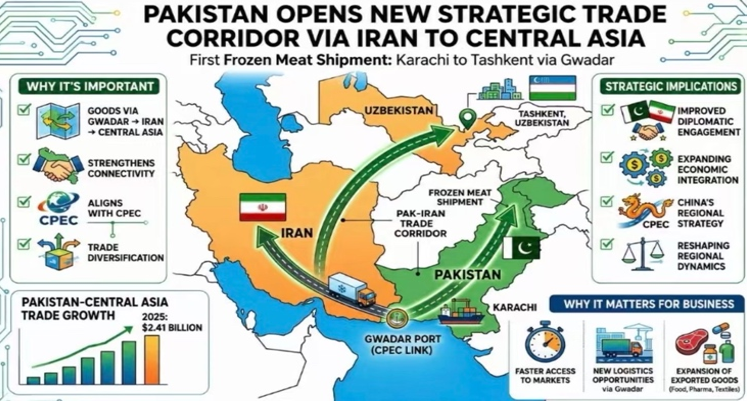
How Pakistan Reached Central Asian States via Iran?
The Directorate General stated in a press release that the shipment, consisting of frozen beef, was transported by trucks from Karachi to Uzbekistan. The new route crosses the Gabd-Rimdan border between Pakistan and Iran, with the cargo proceeding from Rimdan in Iran onward to Tashkent.
Pakistan has increasingly viewed Iran as a viable alternative trade corridor for exports to Central Asia, as traditional overland routes through Afghanistan have faced repeated disruptions. In recent months, Pakistan closed key border crossings with Afghanistan amid fierce clashes, which severely constrained bilateral trade and limited access to landlocked Central Asian markets.
“The Iran corridor will provide access for Iran and Central Asian states to Pakistan’s ports of Karachi and Gwadar,” the press release noted. It added that Pakistan Customs and the Ministry of Commerce are collaborating to promote international transhipment through Pakistani ports. Recently, Pakistan Customs has permitted storage facilities for international transhipment cargo at off-dock terminals to enhance port handling capacity.
The Directorate-General of Transit Trade further highlighted that border customs points such as Taftan, Rimdan, Sost, and Gwadar have been enabled by the International Road Transport Union (IRU) in Geneva to facilitate the movement of international road transit consignments from Pakistan.
What happened after April? Deteriorating Security Situation in Balochistan
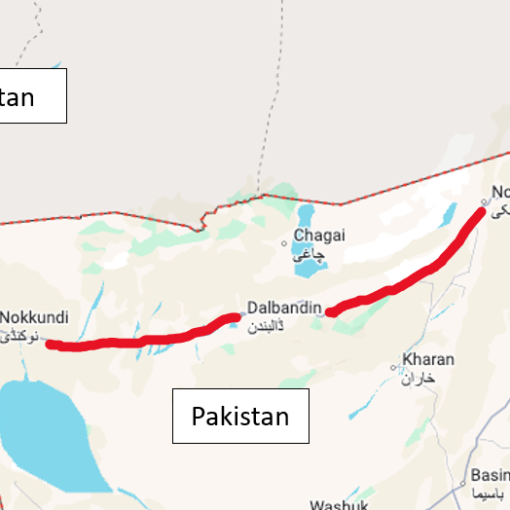
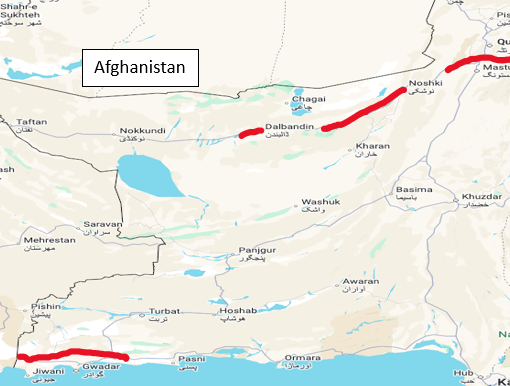
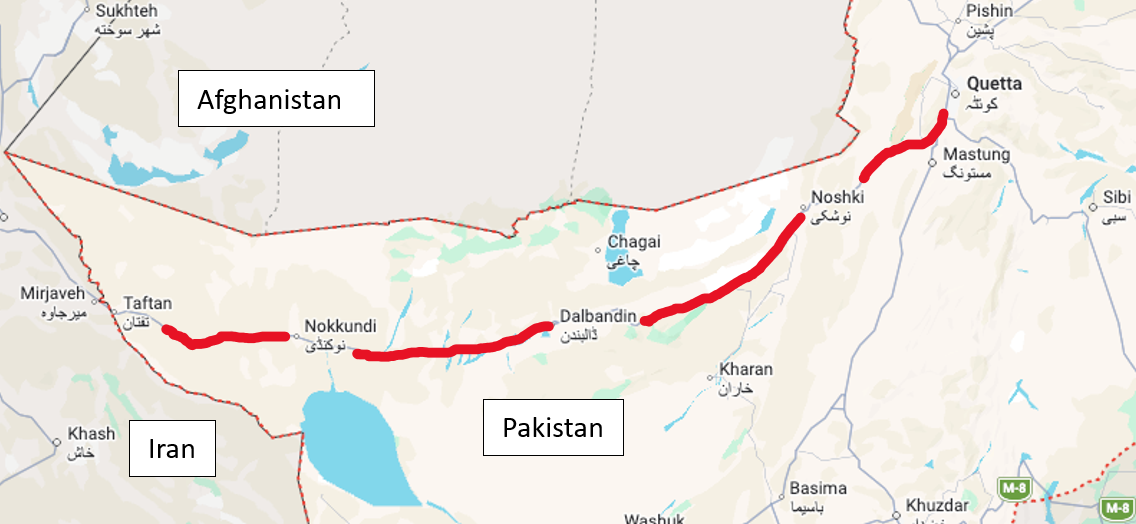
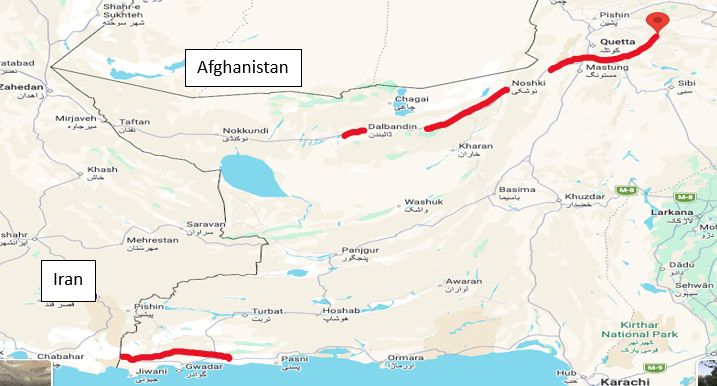
The new trade connectivity to Central Asia via Iran has been accompanied by a sharp rise in terrorism near the Iranian border. The Baloch Liberation Army (BLA), a separatist group, has repeatedly targeted the N-40 highway — the main route linking Pakistan and Iran via the Taftan border. In areas such as Chagai, Noshki, and Mastung, convoys have been halted, vehicles set ablaze, and security checkpoints attacked. More than 50 people, mostly security personnel, were killed in July. In Kharan, Panjgur, and Kalat, communication networks were disrupted, and bridges on major highways were destroyed.
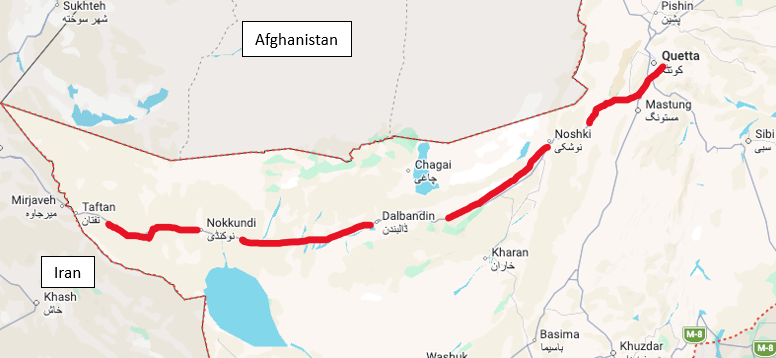
While the Gabd border crossing remains relatively calm, separatists carried out a suicide attack on a security installation near the Makran Coastal Highway and Gabd region. Residents of the Jiwani coastal area have reported feeling under siege, with the region cut off from the rest of the country for over a week. Many regional transporters have expressed serious concerns over the deteriorating security situation.
Links to our previous assessment reports on Balochistan
https://obor.chuhai.edu.hk/nsbrri-monitoring-and-evaluation-june-2026/
What are the Upcoming Challenges for Trade Connectivity via Iran?
Spoiler elements are actively attempting to destabilise the region. There has been an alarming surge in terrorist activities in Balochistan since the first trade convoy was dispatched. The systematic targeting of road networks, major highways, and communication infrastructure indicates a deliberate strategy to sabotage trade and connectivity. We assess from ground sources and regional analytical reports that the spoilers would promote more violence in the near future.
This instability directly threatens regional connectivity and cross-border trade between Pakistan and Iran. Additionally, escalating tensions in the Middle East, particularly the US-Iran conflict, pose a growing risk to the Pak-Iran border. Recent US strikes on Chabahar — a key coastal area near Gwadar — highlight the vulnerability. Any expansion of the conflict could severely undermine Pakistan’s trade interests in Central Asia via Iran.
Why are these developments important for China?
This development carries significant strategic implications for China, primarily due to its deep economic and strategic investments in Pakistan under the China-Pakistan Economic Corridor (CPEC), a flagship project of the Belt and Road Initiative (BRI).
• Gwadar Port and Regional Connectivity: Gwadar is a cornerstone of CPEC and serves as China’s key gateway to the Arabian Sea and beyond. The new Iran route aims to link Gwadar and Karachi to Central Asian markets, aligning with China’s goal of creating overland and maritime connectivity bypassing unstable routes. However, rising insecurity in Balochistan directly endangers Chinese personnel, infrastructure, and investments.
• Security Risks: Chinese workers and projects in Balochistan have repeatedly been targeted by Baloch separatist groups. The surge in attacks following the activation of the Iran corridor raises serious concerns about the safety of CPEC projects and could delay or deter further Chinese investment.
• Broader BRI Objectives: China seeks stable trade corridors to Central Asia, the Middle East, and Europe. Disruptions along the Pak-Iran route or escalation involving Iran could fragment these corridors, forcing China to reassess risk levels and potentially divert resources.
• Geopolitical Dimension: Heightened US-Iran tensions and strikes near Chabahar bring external powers closer to China’s strategic backyard, complicating Beijing’s efforts to maintain stability along its western frontiers and secure energy and trade routes.
In summary, while the Iran corridor offers Pakistan (and by extension China) a valuable alternative to the Afghan route, the accompanying surge in terrorism and regional volatility underscores the urgent need for enhanced security measures. Stability in Balochistan is critical not only for Pakistan’s economic ambitions but also for the long-term success of China’s BRI ambitions in South and Central Asia.